Image Image

Step-by-step guide on how to use Kefir

kefir for weight loss

What is Kefir?

Kefir is a colony of lactobacilli (bacteria) and yeasts. It is a probiotic food that helps to “populate” the intestine with good bacteria. This probiotic can be made with water or with milk. Our gut contains billions of both good and bad bacteria. A larger amount of good bacteria favours your intestinal health because they overpower the bad bacteria. As a nutritionist, I drink and recommend kefir for gut health. Let’s explore the benefits and how to use it.

Benefits of kefir

– Enhances immunity and prevents infections
– Improves nutrient absorption
– Aids in the production of B-complex vitamins
– Aids in weight loss by improving gut microbiota
– Acts in the prevention and treatment of cancer as it can prevent the formation of an environment conducive to its onset
– Helps to reduce levels of bad cholesterol and increases HDL, potentially preventing cardiovascular diseases
– Can improve blood glucose levels
– Eliminates toxins and impurities from the body and improves hepatic detoxification

Besides kefir, for better intestinal health you need: water + fibre + good diet + good intestinal microbiota (probiotics) + prebiotics (food for the good bacteria, mainly fibres found in fruits and vegetables in general, specifically in green bananas, chicory root, yacon potatoes, legumes, beetroot) + physical activity!


Which is better, water or milk kefir?

Milk kefir has more different types of bacteria than water, with milk kefir having 35 different strains and water having approximately 15 strains.

Can you make kefir with coconut milk?

Cow’s milk kefir feeds on lactose, and coconut milk does not contain lactose, so it will not be able to ferment as well.

How to obtain kefir to make at home?

Through donations or commercially in natural product stores and supermarkets.

Can it be frozen?

Milk kefir can be frozen, just the grains alone or with milk; when defrosted, it takes a while to ferment because it enters a dormant state.

Water kefir should avoid being frozen but can be kept in the refrigerator so that it does not multiply too much.

How to prepare milk and water kefir?

Milk 
1. Take a glass container.
2. Place the Kefir grains in this container.
3. Add milk.
4. Allow to ferment at room temperature for at least 24 to 72 hours.
5. Filter the byproduct metabolised by the grains.
6. Reserve the grains again in the glass and restart the process.

Water 
1. Take a glass container.
2. Place the Kefir grains in this container.
3. Add filtered water and brown sugar.
4. It is recommended to use 2 tablespoons of brown sugar for every 500 ml of filtered water.
5. Filter the byproduct metabolised by the grains.
6. Reserve the grains again in the glass and restart the process.

Adding kefir to your diet has many benefits. There are commercial brands that produce them and they can be bought in the supermarket. Prefer plain products with no artificial flavours added as they are natural and without any artificial sweeteners or preservatives. You can add fresh fruit and seeds to make your bought or homemade kefir more delicious and full of flavours. Include this natural probiotic in your diet and experience the benefits for your gut and immunity.

For more nutrition tips and recipes from nutritionists in London, read more in our blog.
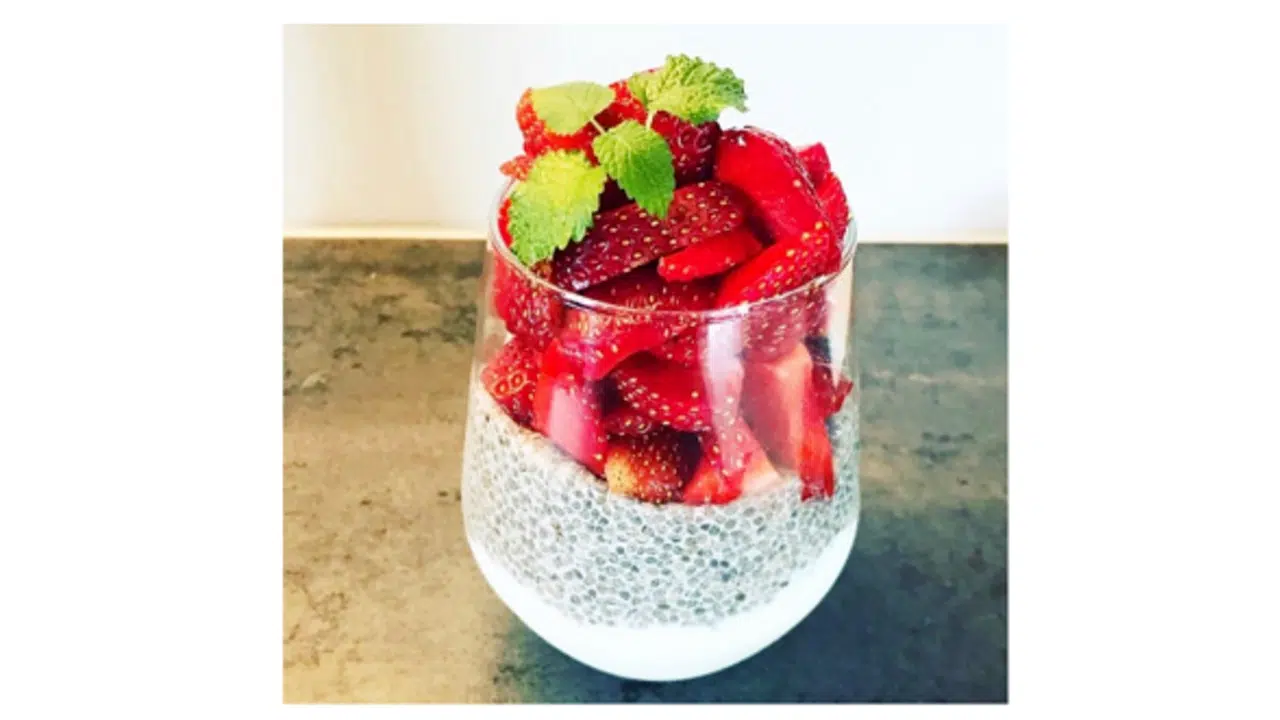
Overnight Chia Pudding

Overnight Chia Pudding

Learn how to make overnight chia pudding, a delicious, nutritious recipe that satisfies and even helps you lose weight. It’s very adaptable and can be a good option for snacks, desserts or breakfast. 

Enjoy this delicious recipe created by a London nutritionist.

So let’s get to the recipe!

Overnight Chia Pudding (serves 2)

Ingredients: 

  • 300ml coconut milk or almond milk
  • 40g chia seed
  • 50g chopped of red fruits (strawberries or blueberries or blackberries)
  •  Few drops of stevia (optional for taste)
  • 2 tablespoons unsweetened plain Greek yogurt (optional)  

Method of preparation: 

1. In a container or cup add the Greek yogurt and set aside. 

2. Mix the vegetable milk with the chia and sweetener and add it over the yogurt. 

3. Store in the fridge for at least 12 hours. 

4. Remove from the fridge and add the chopped the red fruits on top. 

5. Okay, now just enjoy yourself! 

You can change the fruits according to your preference, but I recommend opting for fruits with less carb content, such as strawberries, blackberries, blueberries, raspberries, passion fruit, kiwi, etc. 

This recipe makes more than 1 serving, so you can consume it in 2 meals or share with someone. Enjoy it!

Get to know the different types of proteins

proteins for weight loss

Different types of proteins are present in thousands of foods and should be eaten in adequate amounts according to each metabolism to help regulate body activities.

But, what are proteins?

They are substances formed by various amino acids, which perform numerous functions in the body since all organs require a type of amino acid to generate their function or stimulus.

Proteins are beneficial to health because they can control the digestion and absorption of other nutrients, help boost immunity, carry oxygen in the blood and to the muscles, improve energy and muscle contraction, as well as are associated with hunger and satiety hormones.

How proteins can aid weight loss?

Protein consumption should be divided throughout the day according to the number of meals. This subdivision will stimulate the process of reducing body fat and maintaining muscle mass or synthesis. The amounts and sources of protein consumed to ensure the effectiveness of weight loss depend on each person’s life habits.

Proteins generate effects that enhance weight loss, the body uses energy to digest and absorb these nutrients. As the digestion process is over, the production of digestive enzymes and satiety hormones is increased to break down and absorb the proteins, as well as hunger is reduced because there is less production of insulin, and the next mealtime is extended. As a result, the total calorie intake of the day decreases, the choices of food sources become better and weight loss occurs healthily.

Check with a nutritionist specialised in weight loss the right amount of protein you should consume for weight loss results.

weight loss transformation

Did you know that different types of proteins can be consumed?

There are two types of protein sources: animal sources and vegetable sources. The consumption of these two sources can simultaneously occur when legumes (vegetable protein) and all kinds of meat (animal protein), for example, are consumed at the same meal (lunch or dinner).

The vegetable food sources that contain a large amount of protein are lentils, beans, tofu, chickpeas, almonds, chia seeds, peas, and quinoa. Examples of animal protein sources are eggs, fish and seafood, milk and dairy products, meats, and poultry.

And how can you add these proteins to your daily eating routine?

You must eat at least one protein source in every meal of the day. For example, you can have eggs for breakfast; meat, beans, and quinoa at lunch and fish or tofu at dinner.

In summary, proteins are essential nutrients that play a critical role in various bodily functions, from supporting muscle contraction to regulating hormones related to hunger and satiety. Consuming an adequate amount of protein, tailored to individual metabolism and lifestyle, is essential for maintaining overall health and aiding in weight management. By including both animal and plant-based protein sources in your diet, you can ensure a balanced intake that promotes muscle synthesis, enhances digestion, and supports sustained energy levels. For personalised advice on protein consumption, consulting a nutritionist is recommended to achieve optimal health and weight loss goals

Carnivore Diet: Is It Healthy to Eat Only Meat?

Healthy Carnivore Diet Meal Plan

Carnivore diet: can you eat only meat?

What do you think about eating meat, just meat and still improving your productivity and mental clarity, boosting your libido, and controlling your blood pressure? Well, that’s what the followers of the carnivore diet believe in, and the basis of this diet is just meat, offal, and eggs (some include fish and cured cheese) and no vegetable or plant-based foods or any kind of supplement.

It is the opposite of the vegan diet. The carnivore diet is based on high protein and saturated fats and no carbohydrates, and there is no defined protocol for the number of proteins and fats to be ingested.

In some countries, people have migrated from the low-carb and ketogenic diet to the carnivore diet, and one of the most famous adepts of this diet is Shawn Baker. In his profile on social media, he said that the diet is very easy because he does not need meal plans or counting calories. “I just have to think about how hungry I am and how many steaks I want to eat,” he said.

Followers of this diet say that it brings several benefits such as fast weight loss, improved sleep, more disposition, improved libido, greater mental clarity, less hunger and more satiety, more strength and more endurance in training.

And now from the nutritional point of view, is a carnivore diet healthy in the long term? And how about the other nutrients and fibres?

The disadvantage of the carnivore diet is that it is just meat, which means that carbohydrates and healthy fats are completely out of the diet. Carbohydrates contain almost non-existent nutrients in meats such as fibre, vitamin C, vitamin K, and folic acid among others. A meat-only diet, especially with an excess of saturated fat, can increase the risk of inflammation in the body.

Moreover, the functioning of our gut is impaired due to the lack of substrate to have a healthy gut microbiome. Recent studies have shown the importance of having a healthy gut microbiome to have good health, strong immunity and prevent various diseases.

Another aspect is that there are bioactive compounds such as polyphenols and antioxidants that are found specifically in plant-based food that reduce the risk of oxidative stress and also inflammation.

Despite the promises that the carnivore diet brings no evidence studies are showing its benefits.

Before making any drastic changes on your diet always consult with a nutritionist or dietitian to ensure you meat all requirements and don’t miss out on any essential nutrient.

Nonalcoholic Fatty Liver Disease, How To Treat It?

Treatment of Fatty Liver Disease

Non-alcoholic fatty liver disease (steatohepatitis) is the accumulation of fat in liver cells impairing liver function and is one of the most common forms of liver disease that is mainly related to increased obesity around the world. Approximately half of the cases can progress to more severe forms of the disease like liver cirrhosis and cancer.

The most common risk factors for non-alcoholic steatohepatitis are obesity, diabetes, carbohydrate-rich diet with rapid absorption and saturated fat, rapid weight loss, viral hepatitis, insulin resistance, elevated LDL cholesterol and triglycerides, high levels of estrogen, surgeries and sedentary lifestyle. As a nutritionist, I see in my clinic numerous cases of people who are at higher weight and are already starting to develop fatty liver.

In mild cases of steatohepatitis, the disease is asymptomatic (it does not have symptoms), with slow and gradual evolution being the most common signs and symptoms pains, fatigue, weakness, loss of appetite and increase of the liver.

The good news is that it is reversible, and the best way to treat steatohepatitis is to reduce body weight by changing eating habits, regular physical exercise and a healthy lifestyle.  In other words, losing weight with quality food and changing lifestyle habits.

How to treat Non alcoholic Fatty Liver Disease?

One of the diets that have positive results in improving cases of steatohepatitis is the Mediterranean low-carb diet, which has a reduced carbohydrate content, high in antioxidants, high in fibre and a good amount of healthy fats and lean proteins.  The nutritionist will be able to design a personalised meal plan for weight loss and fatty liver treatment at the same time.

There are some foods and their compounds that can help prevent and treat fatty liver disease like ginger, green tea, coffee, turmeric, broccoli, nuts, avocado, garlic, fish that contain omega 3, and citrus fruits among others.

The first step to treatment is to look for a nutritionist. The nutritionist not only will help you to understand the condition but will also guide you and support you during the treatment with the best diet approach for lasting results. Blood test checks are recommended to monitor progress.

whatsapp
Follow us on Instagram @britzke.nutrition